For small teams, social media often feels chaotic.
One week you're posting consistently. The next, you're scrambling for ideas. Soon after, everything goes quiet again.
It’s not a motivation problem: it’s a system problem.
Because small teams don’t fail at social media due to lack of effort, they fail due to lack of structure.
The good news? You don’t need a large marketing department to succeed. You just need a system that works!
Why Most Small Teams Struggle With Social Media
Social media rarely fails overnight. Instead, it slowly becomes harder to manage.
Many teams fall into the same patterns:
- Posting reactively instead of strategically
- Creating content from scratch every time
- Switching messaging too often
- Feeling constant pressure to stay visible
Without structure, social media turns into a daily decision-making exercise, and decision fatigue quickly follows.
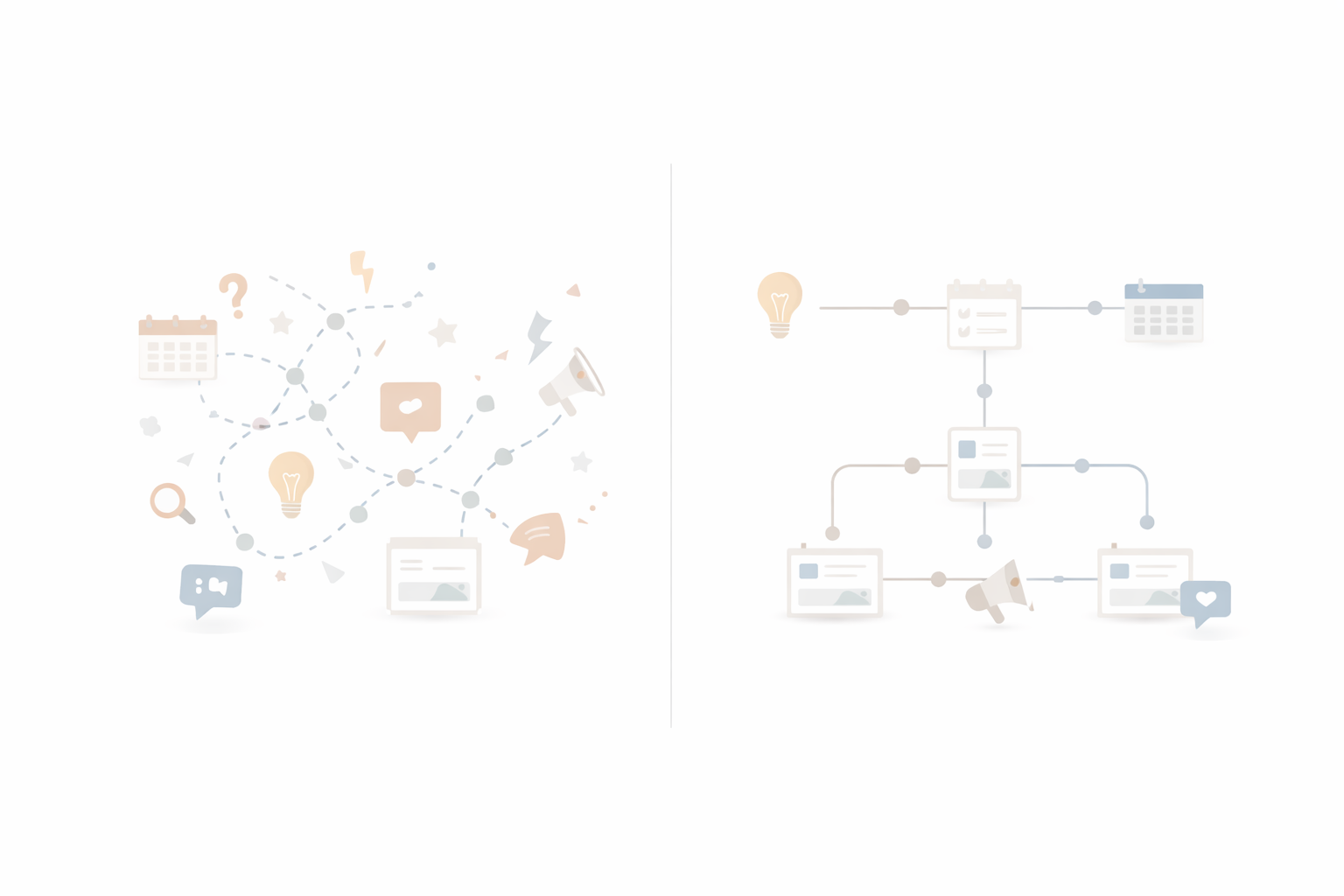
What a Social Media System Actually Looks Like
When people hear the word system, they often imagine something complex.
But effective systems are usually simple.
A strong social media system typically includes clear themes your brand talks about repeatedly, a realistic posting rhythm, but also reusable content and defined workflows
That’s it.
Not complexity, but clarity.
And clarity scales.
A good system removes daily guesswork.
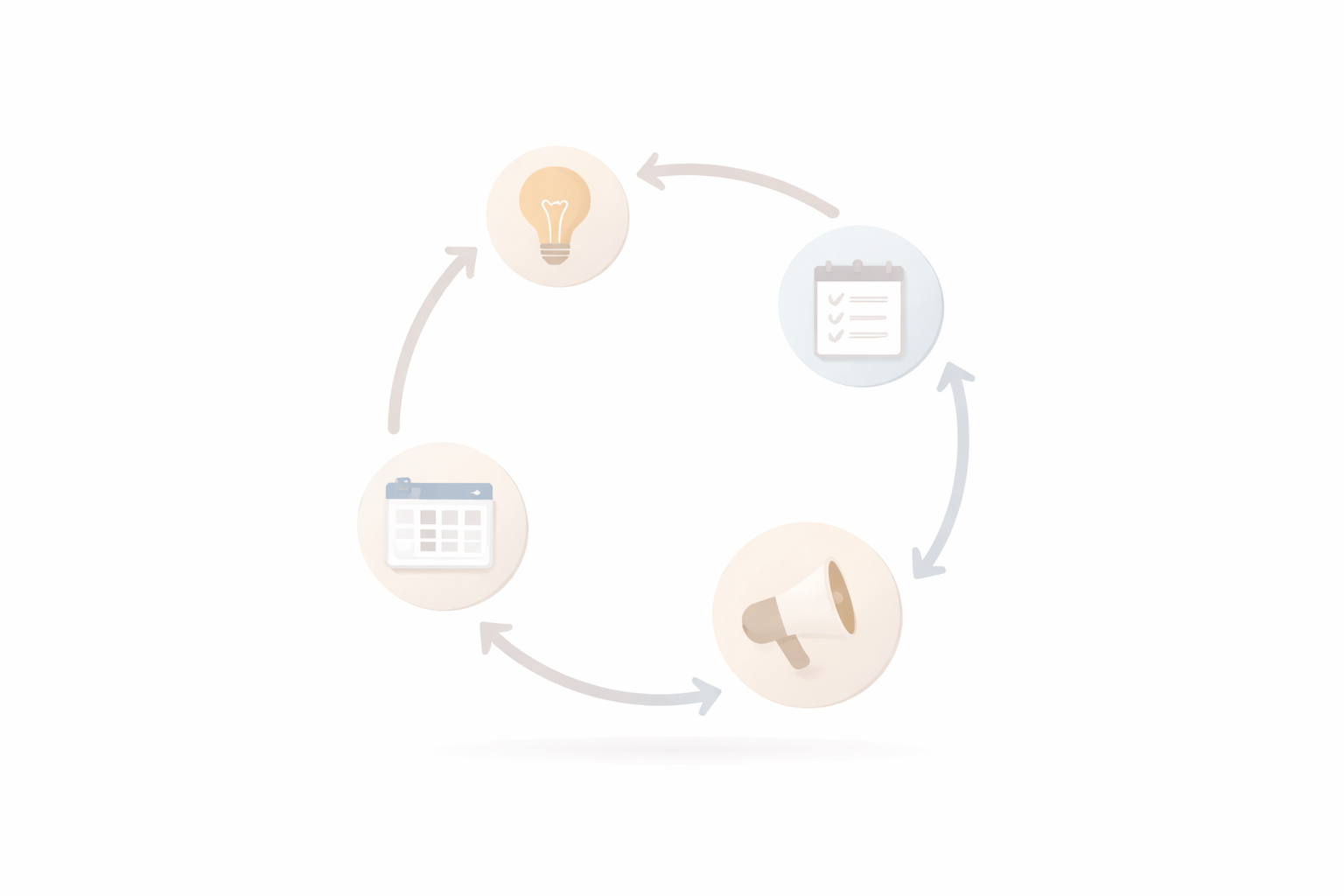
The 4-Part Social Media System for Small Teams
Instead of trying to do everything, focus on building a foundation that supports consistent execution.
1. Define Your Content Pillars
Choose 2–4 topics you want your brand to be known for.
When your content revolves around consistent ideas:
- Your messaging becomes clearer
- Your audience knows what to expect
- Algorithms better understand your content
Repetition builds recognition.
2. Build a Repeatable Workflow
Stop reinventing the process every week.
Create a simple flow:
Idea → Create → Schedule → Review → Reuse
When the workflow is predictable, execution becomes easier.
3. Prioritize Consistency Over Frequency
You don’t need to post every day to grow.
You need to show up regularly enough to build familiarity.
Consistency builds trust, strengthens positioning and signals reliability.
Frequency without direction creates noise.
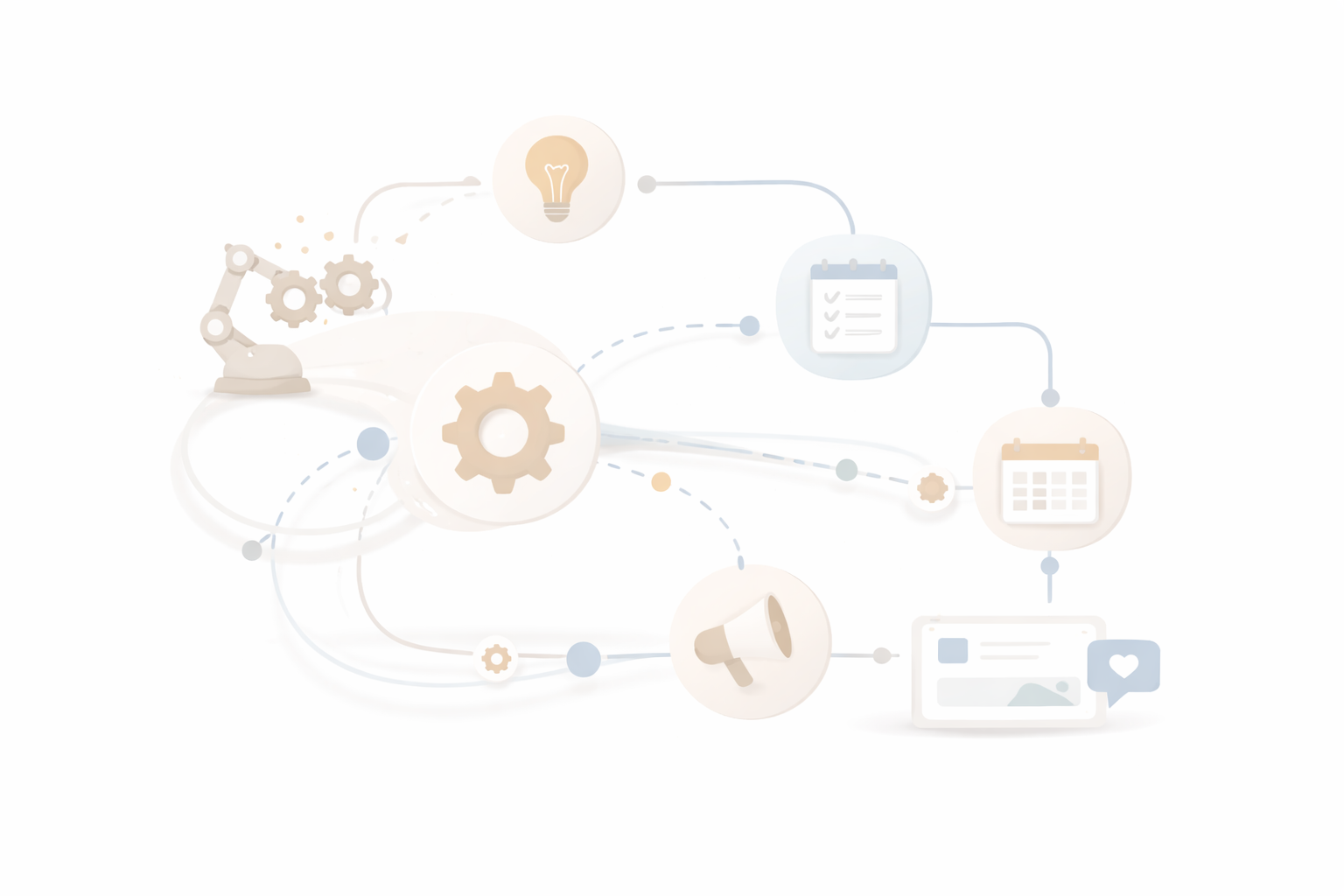
4. Automate Once the System Works
Automation is powerful — but only after your foundation is clear.
Otherwise, you risk scaling inconsistency.
When paired with a strong system, automation helps:
- Maintain rhythm
- Reduce manual effort
- Protect focus
- Support long-term growth
Tools don’t create strategy — they support it.
Why Systems Always Beat Motivation
Motivation is unpredictable.
Some weeks it’s high. Others, it disappears.
Systems don’t rely on energy, they rely on structure.
When your process is defined:
- Fewer decisions are required
- Execution becomes faster
- Stress decreases
- Consistency improves
Small teams don’t scale through effort alone.
They scale through repeatable processes.

A Better Way to Think About Social Media
Instead of asking:
“What should we post today?”
Start asking:
- What do we want to be known for?
- What ideas deserve repetition?
- What rhythm can we sustain?
Because long-term visibility isn’t built through intensity.
It’s built through consistency.
Final Thought
Small teams don’t need more tools. They don’t need more pressure.
They need fewer daily decisions.
Build a system once, and let it carry your strategy forward.